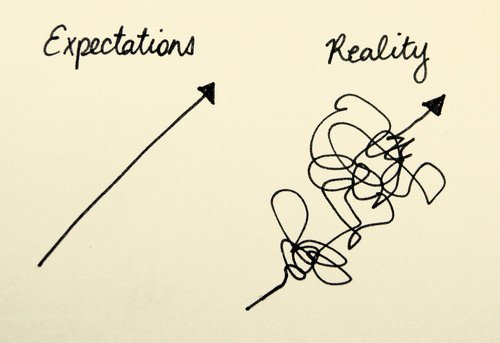
Let me tell you about two calendars that are often misaligned.
On one side, you’ve got corporate and foundation calendars, with their fiscal years, quarterly reporting, budget cycles, and year-end tax planning. Corporate philanthropy guides talk about targeting a fixed percentage of pre-tax profit each year, which is then mapped neatly to business timelines. In many cases, decisions cluster around Q4, grants get announced in Q1, and everything is designed to look tidy on a spreadsheet.
On the other side, you’ve got community rhythms in Hispanic neighborhoods: school years, harvest seasons, hurricane windows, migration patterns, cultural celebrations, and religious calendars. Trust-building follows its own clock. Kids don’t learn on a quarterly earnings schedule, and families don’t sync crises with board-meeting dates.
When Funders’ Timelines Are Misaligned With Community Reality
When those two calendars collide, you get misaligned timelines: funding that arrives at the wrong moment, ends at the worst moment, or demands results on a schedule that has nothing to do with your reality.
You’ve seen it:
- A corporate funder wants a summer program up and running in six weeks because its fiscal year closes in September.
- A grant period runs January to December, but your key work happens August to May with the school year.
- A project ends just as families are entering harvest season, hurricane recovery, or holiday obligations and that’s when they need you most.
Corporate philanthropy playbooks brag about “consistency, accountability, and alignment with business objectives and community needs.” The problem is that “alignment” often stops at the business side.
Community rhythms get treated as an implementation detail rather than a design principle. Then the implementation challenge you are expected to manage becomes your problem to fix.

The Case for Community-Based Grant Timelines
So how do you fix “being misaligned” without getting written off as “inflexible”?
First, map your community calendar clearly for yourself and for funders. Build a visual of the year that shows:
- When schools start and end.
- When agricultural work peaks.
- When hurricanes or storms typically hit.
- When major cultural and religious events shape people’s availability.
Use that map proactively in conversations:
“Our heaviest family engagement happens from October to April. A March start date misses the window; a July end date cuts us off midstream.”
You’re not complaining. You are offering vital operational information that helps a funder protect its investment.
Negotiate Dates and Milestones
Second, negotiate start dates and milestones. Corporate giving guides talk about tailoring programs as long as they can still show impact and accountability. Use that opening:
“We’re fine with your fiscal year, but we need flexibility on when activities start and how milestones are timed to align with the school year and cultural calendar.”
Propose revised timelines that still fit within the funder’s fiscal year while honoring the reality of your community.
Design Scopes Around What Is Possible
Third, design your scopes around what is truly possible within the funding window. If a funder insists on a nine-month or 12-month grant, resist the temptation to over-promise just to get the money.
Instead:
- Focus on a program cycle that matches community rhythms.
- Clearly label what constitutes groundwork versus full implementation.
- Describe outcomes in phases.
For example:
“In this period, we’ll build trust, enroll families, and establish routines. Deeper literacy gains or leadership development will show up over years, not months.”
Link this to broader research showing that durable outcomes, particularly in education and bilingual settings, require sustained, multi-year investment.
Document the Cost of Their Misalignment
Fourth, take the time to document the cost of poorly timed funding. When programs have to ramp up or down at awkward moments, track:
- Staff overtime and burnout.
- Drops in participation when funding stops at the wrong time.
- Lost opportunities because your organization’s presence becomes unpredictable.
Then tell that story back to funders:
“When projects end mid-school year, families lose trust and we lose momentum. Aligning funding to the academic calendar would protect your investment and improve outcomes.”
Put the Real Calendar on the Table
Finally, remember that you’re not the only one wrestling with this. Sector analyses highlight how changing financial behavior and unpredictable policy environments already disrupt nonprofit fundraising. Misaligned timelines simply add another layer of instability for organizations rooted in communities that cannot just “bridge the gap” with reserves.
Your community doesn’t live by someone else’s Q4, and it doesn’t have to. Your job is to keep putting the real calendar on the table by inviting funders to move their money in sync with the lives they say they care about.