
Congratulations. Your program works. Word is getting around. You’ve got strong outcomes, a loyal community, and maybe even some national attention. And then a funder sits across from you and says, with absolute confidence: “This is incredible. Have you thought about scaling this statewide? Nationally?”
You smile. And internally, you feel a cold chill. Or you should.
Because you know what “scale this” often means in funder-speak: take what you built in this specific neighborhood, with these specific relationships, on this specific cultural and linguistic terrain, and replicate it everywhere, fast, with the same grant budget and maybe a webinar or three thrown in so we can spread the word.
The Seductive Trap of Scaling
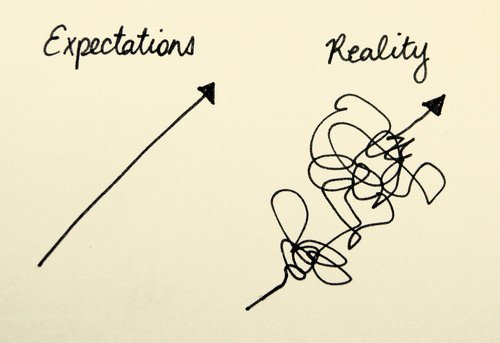
Unrealistic scaling expectations are one of the most seductive traps in philanthropy. Funders get excited about a model. They imagine the exponential impact it can have. But they push for expansion before you’ve fully consolidated what you have. And when the scaled version doesn’t work as well—because of course it doesn’t, context was stripped out—they wonder what went wrong. With you, of course, never with them.
Development practitioners have been naming this for years: real scaling often requires decoupling impact from simple replication, because what creates results is not just a program design; it’s a community relationship, a local team, and the integration of a trust ecosystem built over time. You can scale the framework with effort, but you cannot always scale the magic, no matter how hard you try.
Context Is Part of the Model
This is especially true in Hispanic communities. A program that works for Puerto Rican families in a mid-size urban center doesn’t automatically translate to Mexican farm worker communities in a rural corridor, Cuban Americans in a suburban enclave, or Dominican families in a dense northeastern city.
The language patterns differ. The trust infrastructure differs. The history differs. The regulatory context differs.
Scaling without understanding context doesn’t spread impact; it spreads a shell filled with the seeds of disappointment.
How to Navigate Funder Pressure
So how do you navigate scaling pressure without losing control of your model or your community’s trust?
1. Define What Is Actually Scalable
There are layers in every program:
- The core model: The principles, sequence, and relationships that drive outcomes.
- The cultural and local wrapper: The language, staff identities, community networks, and contextual adaptations.
The core may be replicable. The wrapper must be rebuilt locally every time. Make that distinction explicit in funder conversations:
“The model is scalable. The trust infrastructure has to be grown from scratch in each new community, and that takes time and local investment.”
2. Offer a Smart Expansion Path
Propose a disciplined expansion plan rather than a rapid one. Rather than going statewide overnight, suggest:
- One or two new sites with deep planning, community assessment, and local-partnership development.
- A 12-to-18-month learning phase before any additional replication.
- A community-led evaluation process at each site before you call it “to scale.”
You’re offering disciplined growth, rather than rejection—and careful planning rather than simply barging ahead blindly.
3. Protect the Flagship Program
One of the most common scaling casualties is the original program. Resources and attention shift to new sites, the home community loses the depth of service it had, and the “model” starts under-performing everywhere.
Put this commitment in writing:
“Our scaling plan includes dedicated resources for sustaining quality at our home site. We will not expand at the expense of the community that built this model.”
Fund the Conditions for Success
Fourth, ask funders to support the conditions for scaling—not just replication. That includes:
- Local needs assessments and community-readiness analyses.
- Staffing and training for new-site teams.
- Multi-year support at each site, not a one-time replication grant.
Funders who are serious about scale need to understand that context costs money. If they want your model to work somewhere new, they need to invest in making that somewhere new ready.
Know When Not to Expand
Fifth, tell the truth when a proposed expansion doesn’t make sense. Not every community is ready for your model, and not every model belongs in every community. That is integrity—and it can prevent harmful failure.
You didn’t build what you built by cutting corners on relationships and context, so don’t let the excitement of scale talk you into doing exactly that. Grow when it is right, focusing on growth that keeps communities at the center.
Scale should not mean more cities barely reached: it should mean more people being well served.
Leave a Reply